AI image models still struggle to represent Middle Eastern life accurately.
Published research documents cultural errors and narrow representations in Saudi and Qatari imagery. Those gaps matter when brands, publishers, and model teams need content that people in the region recognize as their own.
The representation gap is about more than the face.
A convincing image can still miss the details of the brief: the place, the objects, the clothing, the language, or the range of people shown. Published regional studies identify several reasons to look beyond visual polish.
Cultural detail can be wrong even when the image looks plausible.
KingdomGlimpses evaluated Saudi cultural imagery from DALL·E 3 and Gemini, reporting problems with faithful representation. [1]
A specific brief can improve cultural accuracy.
A 2026 HBKU thesis tested Qatari scenes with DALL·E 3. More culturally specific prompts improved the results, while model-based judging often overestimated accuracy. [2]
A regional evaluation needs to preserve differences.
Saudi Arabia, Qatar, the UAE, and neighboring markets need their own briefs and reference material. A generic “Middle Eastern” style cannot establish whether a requested local detail is correct.
Visual defaults can converge on a narrow ideal.
Across these four AI self-portraits, the face, hair, age presentation, and lifestyle styling are strikingly similar. Regional creative work demands a much broader range of people and contexts.




Test the images your team actually needs.
A good evaluation starts with a concrete production brief and explicit review criteria. These examples show the visual requirements a regional dataset or evaluation can cover.
A workplace that reflects the brief
Example briefA Saudi woman in her fifties leading a design review in a contemporary Riyadh office, with colleagues of different ages.
Review criteria: Preserve the requested age, role, setting, and composition. Compare repeated outputs for unwanted convergence in appearance or styling.
Use cases: employer branding, business publishing, enterprise campaigns.


Contemporary Riyadh beyond familiar symbols
Example briefAn editorial image of an ordinary evening commute at a Riyadh Metro station, guided by approved photographic references.
Review criteria: Check station details, signage, context, and consistency with the supplied references.
Use cases: tourism, transport communications, city marketing.
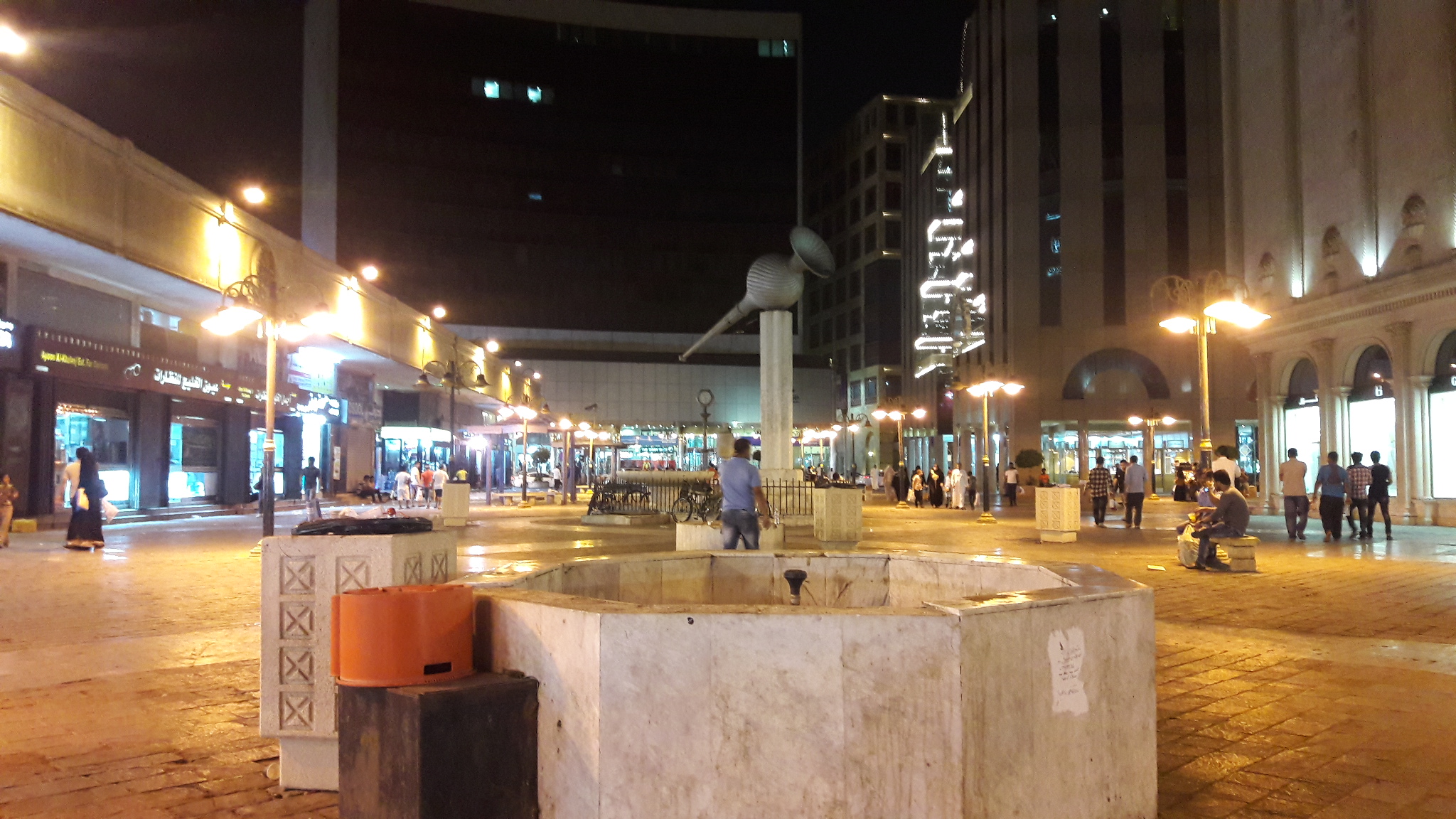

Jeddah’s urban heritage
Example briefA hospitality campaign set in Jeddah’s Al-Balad district, preserving the facade details shown in the reference photographs.
Review criteria: Review architectural elements, setting, and invented details. Retain the distinctions required by the location brief.
Use cases: destination campaigns, hospitality, editorial illustration.
لحياة تشبهنا
Made for life here.
Typography layout exampleArabic copy that survives image generation
Example briefA bilingual campaign asset with the exact Arabic headline “لحياة تشبهنا” and the English line “Made for life here.”
Review criteria: Check exact wording, letter connections, reading direction, legibility, and consistency across revisions.
Use cases: agencies, consumer brands, Arabic publishing.
Regional evaluations and commissioned datasets.
Bring the models, target market, and production decision. We scope the evaluation or dataset around the evidence your team needs.
Choose a model. Test a release. Diagnose recurring errors.
Compare models or workflows against agreed regional briefs and review criteria.
- Matched Arabic and English prompt sets.
- Reference-based cultural and instruction checks.
- An annotated error report, output comparisons, and model-selection findings.
Build a dataset around the market you serve.
Commission a scoped collection for evaluation, model development, or creative quality review.
- Country-specific briefs and generation conditions.
- Outputs, annotations, reviewer notes, and a documented schema.
- Agreed source rights, permitted uses, delivery format, and acceptance criteria.
A method built around inspectable evidence.
Specify the brief
Define the location, language, intended audience, references, and acceptance criteria before comparing outputs.
Review the local details
Use reviewers with relevant cultural knowledge and validate automated checks against human judgments.
Deliver the evidence
Preserve prompts, settings, dates, outputs, annotations, uncertainty, and the reasons behind each finding.
Research informing this work
- KingdomGlimpses, IEEE Access, 2025
- Cultural Evaluation Benchmark for AI Image Generation, HBKU, 2026
- ImageEval 2026 / CRAI-Bench
The cited findings apply to the systems and conditions studied. The portraits above are an illustrative comparison, rather than a measured estimate of model behavior across Middle Eastern markets.
What does your image workflow need to get right?
Tell us the market, visual brief, model or workflow, and the decision you need to make. We will discuss scope, review requirements, delivery, and pricing.